
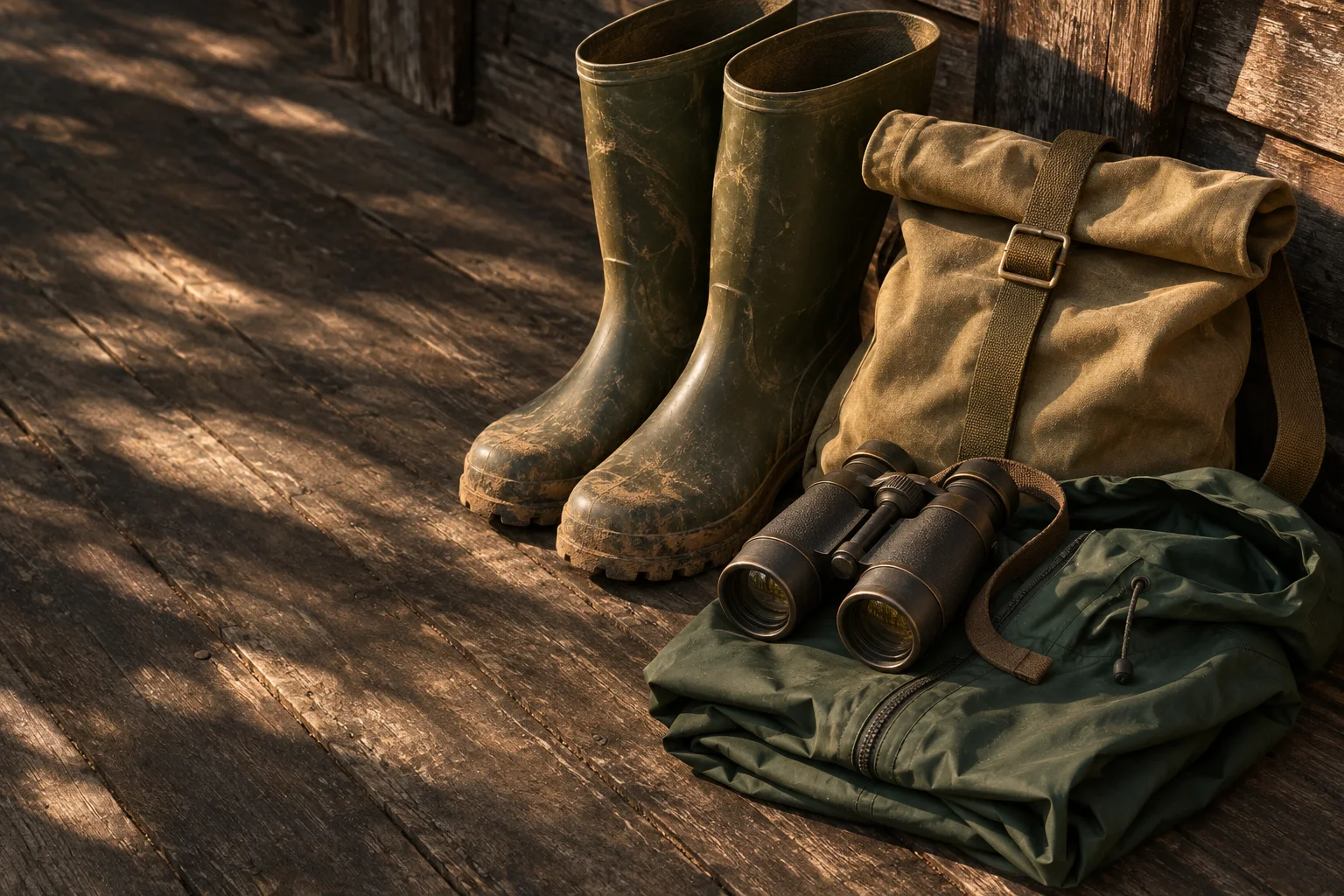
Rubber boots for Mississippi mud
An insulated boot feels different at a creekside picnic table than it does halfway down a muddy levee road. Choose the lining for the hours you actually spend outside.
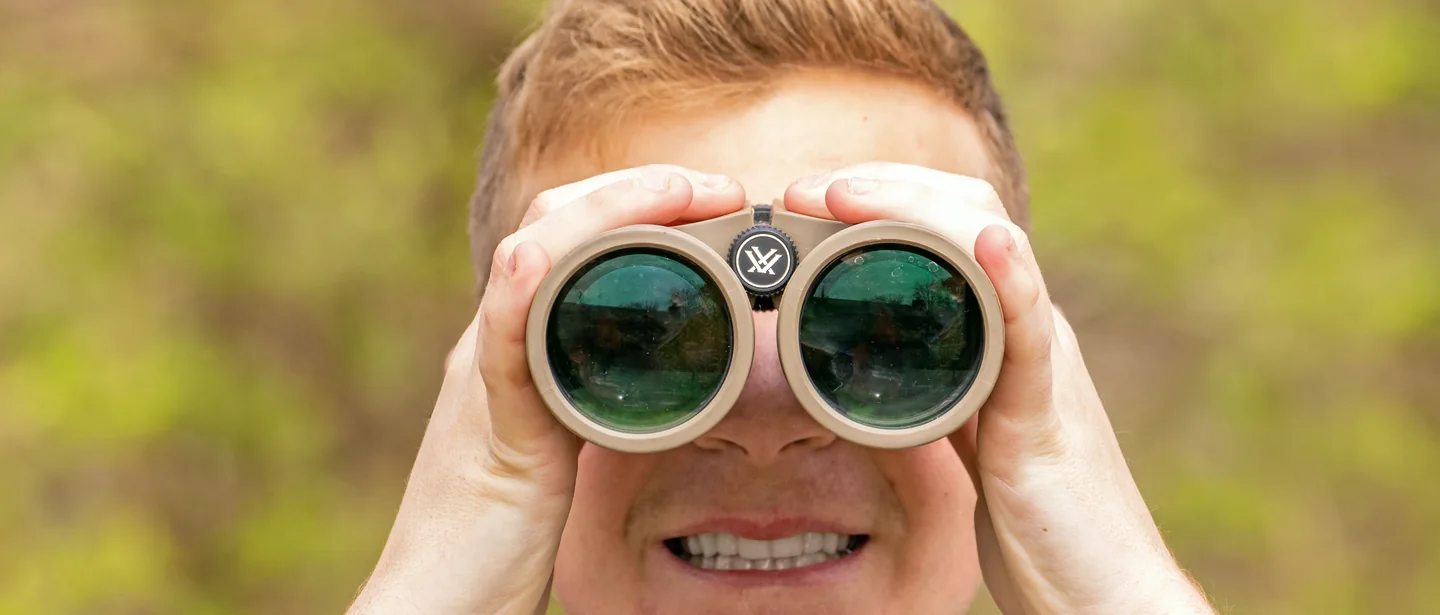
Both magnify a bird eight times. The more interesting differences show up in the width of the view, how the eyecups fit your glasses and what you carry all afternoon.
Linked product names open Amazon. As an Amazon Associate I earn from qualifying purchases. Affiliate disclosure.
The first number is magnification. The second is the diameter of the front lenses in millimeters. Holding magnification steady makes it easier to see what a larger lens changes. Nikon's PROSTAFF P7 models make a good pair to compare because they belong to the same product line.
The PROSTAFF P7 8×30 weighs 17.1 ounces and the 8×42 weighs 20.8 ounces according to Nikon. Three or four ounces sound modest until you add a water bottle, rain shell and camera to a small pack. A pair you enjoy taking on every short walk earns its place more often than one you save for special trips.
Bring the Sibley eastern field guide if you compare the glasses on a public trail. Pick one detail on a distant bird before lifting either pair. Write down which pair showed it first in a pocket field notebook.
Nikon lists a 456-foot-wide view at 1,000 yards for the 8×30 and 377 feet for the 8×42. For a warbler hopping through a tangle beside a Delta boardwalk, the wider view of the compact model gives you more surrounding branches to recognize when you raise the binoculars. That matters more at close range than the distant yardage figure suggests.
Try the heavier glass on an OP/TECH binocular harness before deciding whether its weight bothers you on a long walk. A compact foam pad on a bench makes a steady, seated comparison possible without supporting the barrels against the rail.
The PROSTAFF P7 8×42 provides 20.2 millimeters of eye relief, compared with 15.4 on the smaller pair. Eye relief describes how far back your eye can sit and still see the full field. If you wear glasses, retract the eyecups and check whether you can see one uninterrupted circle without pressing your frames against your face.
The larger pair also has a 5.3-millimeter exit pupil, the small disk of light visible in the eyepiece when you hold it away from your face. The compact model's is 3.8 millimeters. The larger disk gives you more latitude placing your eyes and can help in fading light. Your own pupils, the available light and a steady hold all affect what you actually see.
Use the soft brush end of a Nikon LensPen to lift loose grit before wiping glass according to Nikon’s care instructions. Pack a clean MagicFiber optical cloth separately from tissues and the muddy items in your pocket.
Read a sign across the store or yard, lower the binoculars, then raise them again while keeping your eyes on one letter. Repeat with your normal hat and glasses. Notice how quickly you get a clear circle and whether the focus wheel falls under your finger. On a long walk, fit and a quick, comfortable view are good reasons to choose one size over the other.
As an Amazon Associate I earn from qualifying purchases. How our links work.
A lighter carry and the wider published field of these two models for daytime woodland walks.
Shorter eye relief can make the edge of the view harder to see with some glasses.
Longer eye relief and a larger exit pupil favor glasses wearers and late-afternoon viewing.
Adds 3.7 ounces and gives a narrower field of view than the P7 8×30.
An insulated boot feels different at a creekside picnic table than it does halfway down a muddy levee road. Choose the lining for the hours you actually spend outside.
Two bags can both hold 13 liters and still belong in different parts of the boat. Start with how the bag will travel, then measure what has to fit inside.
A packable shell and a vented jacket solve different problems in a warm downpour. Here’s how to choose between a full-featured shell and a five-ounce backup.