
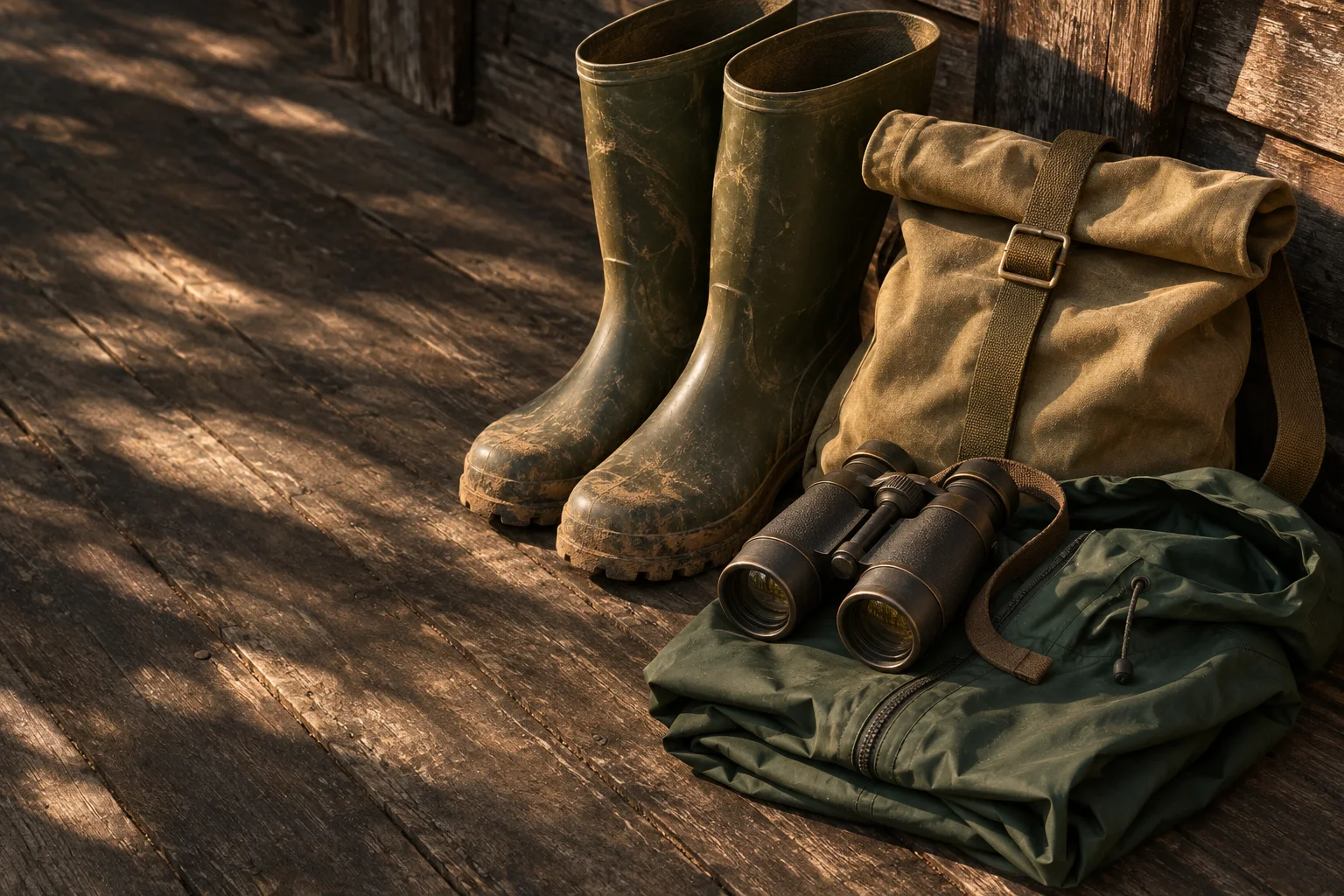
Rubber boots for Mississippi mud
An insulated boot feels different at a creekside picnic table than it does halfway down a muddy levee road. Choose the lining for the hours you actually spend outside.
Two bags can both hold 13 liters and still belong in different parts of the boat. Start with how the bag will travel, then measure what has to fit inside.
Linked product names open Amazon. As an Amazon Associate I earn from qualifying purchases. Affiliate disclosure.
A spare shirt and socks, tucked inside a daypack, get a sheltered ride. A bag set down on a gravel landing or carried loose in a canoe gets scraped, lifted and shifted all day. For the first job, a light bag with a window makes clothing easy to find. For the second, tougher fabric and attachment points earn the extra weight.
Sea to Summit's 13-liter Lightweight View uses 70-denier nylon and weighs 2.9 ounces. Its 13-liter Big River uses 420-denier nylon and weighs 6.8 ounces. Denier describes yarn thickness. Fabric construction and coating also matter, so use those figures to compare these particular bags rather than as a universal waterproofing scale.
A Sea to Summit guide map case lets the person reading the map keep the main bag closed. For a phone you need during the day, check its dimensions against a Nite Ize RunOff phone pouch with your everyday phone case still fitted.
Lay out the actual spare clothing you carry, including that bulky fleece you pack in January. Roll the clothing into a loose cylinder, then compare its length and width to the maker's dimensions with the closure rolled. If you have to squeeze every bit of air out to make the buckle meet, a larger bag will make repeated access much easier.
Separate the things you need often from the things that should stay dry until the trip ends. A shirt buried under a field notebook is one more reason to break the seal with wet hands. A window helps a shared crew identify which closed bag has the spare layer.
Use the actual cushioned boot socks and spare layer in your sizing trial. A mesh stuff sack makes it easy to lift the entire clothing bundle out of the dry bag without pulling half the contents across a wet landing.
Smooth out the opening, roll it as directed by the manufacturer and buckle it without folds or clothing crossing the sealing surface. Both of these models use waterproof fabric. The manufacturer says water can still enter through a submerged roll-top. A phone or camera that must survive immersion needs its own case rated for that use.
If a small accessory needs crush protection, measure it against the inside of a Pelican 1040 case before packing. A MagicFiber cloth kept in its own clean pouch is useful for drying splash marks on glasses when you get ashore.
At the landing, pack muddy shoes separately so grit can't grind against the bag in the truck. At home, open it fully and let the inside dry before storage. Check the fold line and the base when the bag is empty. Those areas are easier to inspect before a trip than when all your spare clothing is packed.
As an Amazon Associate I earn from qualifying purchases. How our links work.
The window makes spare layers easier to identify in a pack or shared gear bag.
Its lighter fabric calls for care around sharp corners and rough surfaces.
Heavier fabric and lash points suit exposed carriage and frequent handling.
Almost four ounces heavier than the 13-liter View. Both have roll-top limits under water.
An insulated boot feels different at a creekside picnic table than it does halfway down a muddy levee road. Choose the lining for the hours you actually spend outside.

Both magnify a bird eight times. The more interesting differences show up in the width of the view, how the eyecups fit your glasses and what you carry all afternoon.
A packable shell and a vented jacket solve different problems in a warm downpour. Here’s how to choose between a full-featured shell and a five-ounce backup.