
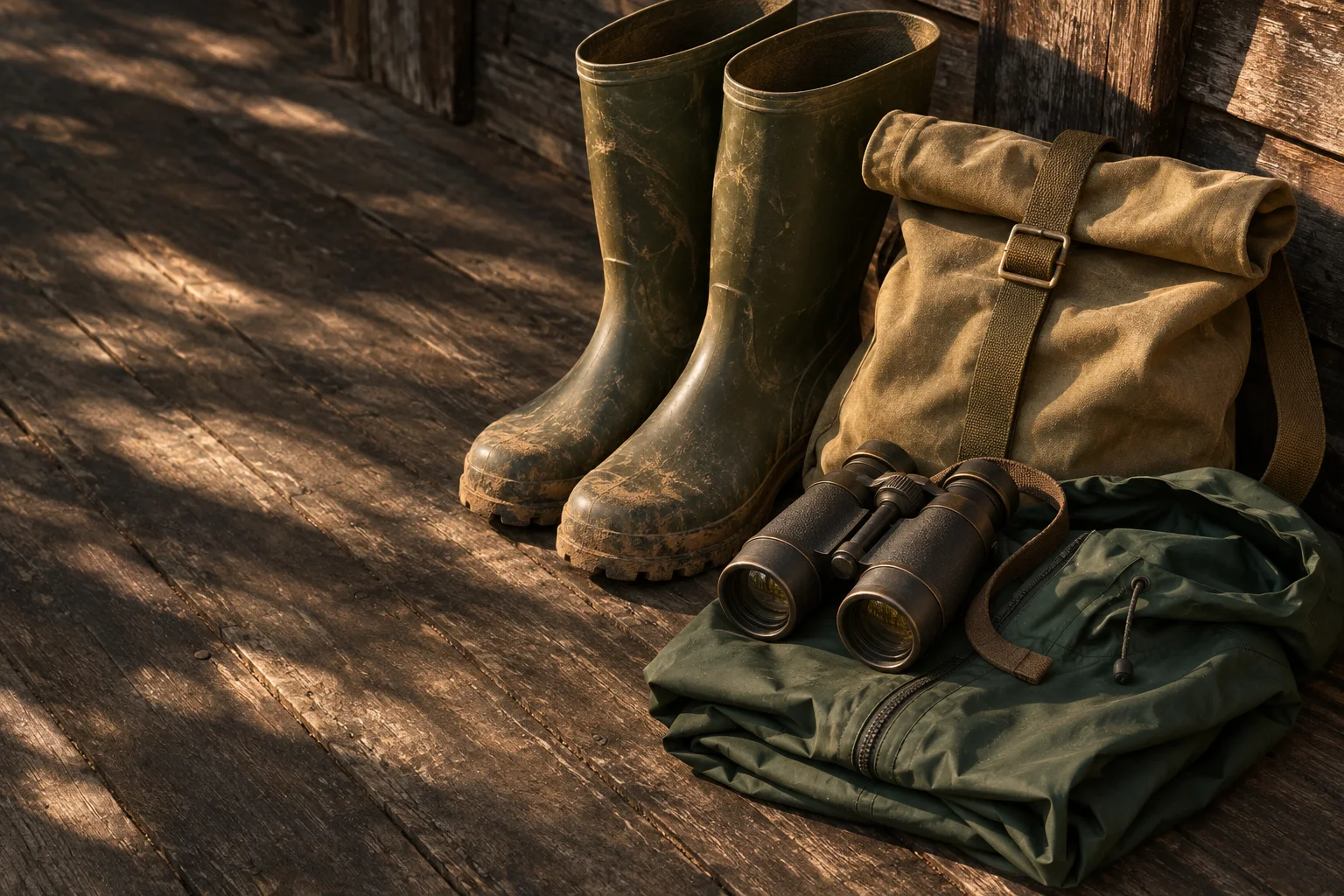
Rubber boots for Mississippi mud
An insulated boot feels different at a creekside picnic table than it does halfway down a muddy levee road. Choose the lining for the hours you actually spend outside.
A packable shell and a vented jacket solve different problems in a warm downpour. Here’s how to choose between a full-featured shell and a five-ounce backup.
Linked product names open Amazon. As an Amazon Associate I earn from qualifying purchases. Affiliate disclosure.
For a summer walk with a brief shower in the forecast, you may carry the jacket for three hours and wear it for ten minutes. A shell that folds into its own pocket makes sense there. For an all-day outdoor event or a trail-work morning in steady rain, pockets, cuff adjustment and ventilation can make a heavier jacket worth carrying.
A rain shell slows the movement of air around your torso. Working hard in humid air can leave the inside of a waterproof jacket damp with perspiration. If you routinely wear a shell while walking, give vents you can reach while wearing your pack a prominent place on the shopping list.
For a warm spring walk, try the shell over a Columbia Tamiami II long-sleeve shirt and check whether the cuffs bunch. Repeat with the Osprey Daylite loaded so you can tell whether the shoulder straps cover the vents.
Patagonia’s men’s Torrentshell 3L has a 50-denier nylon face, a separate inner backing and underarm zippers. The listed weight is 14.1 ounces. You can leave the front zipped while opening the underarm vents for a climb or a trip carrying supplies up from the landing. Adjustable cuffs make it easier to keep a loose sleeve off your hands.
Wear your daypack over it during a fitting. A waist belt can land directly across hand pockets. Try working both underarm zippers, then reach overhead as if putting a bag into the truck. A shell that lifts past your waistband will leave an annoying gap.
Check the jacket’s care label before using a technical cleaner such as Nikwax Tech Wash. Keep a strip of Gear Aid Tenacious Tape at home for compatible outer fabrics. A small puncture is easier to patch while the shell is clean and dry.
Outdoor Research lists its men’s Helium UL at 5.7 ounces with a 15-denier face fabric and a chest pocket that doubles as storage. That's 8.4 ounces less than the listed Torrentshell weight. The stripped-down layout suits a small daypack, particularly when you carry your essentials in the pack anyway.
Much of the choice comes down to access. A chest pocket stays above most waist belts, while hand pockets give you places for damp gloves. A lighter face fabric also warrants some care around briars, rough bark and snagging hardware. A frequent trail-maintenance volunteer has different priorities than someone keeping an emergency layer in a camera bag.
Zip the shell, tighten the hood over your regular cap and turn your head slowly to each side. Can you look over your shoulder without seeing the inside of the hood? Check whether water would run onto your glasses from the brim. A well-fitting hood is one of the few features you appreciate during every minute of rain.
Try the hood with a billed Outdoor Research Seattle Rain Cap if you wear glasses. Slip a dry MagicFiber lens cloth in a pocket you can reach with the jacket zipped. Check that the brim and hood turn together before heading outside.
As an Amazon Associate I earn from qualifying purchases. How our links work.
Underarm vents and adjustable cuffs for days spent moving in wet weather.
Takes more weight and pack space than the minimalist Helium UL.
A compact backup for daypacks with little room to spare.
One chest pocket and a lighter outer fabric suit a narrower set of jobs.
An insulated boot feels different at a creekside picnic table than it does halfway down a muddy levee road. Choose the lining for the hours you actually spend outside.

Both magnify a bird eight times. The more interesting differences show up in the width of the view, how the eyecups fit your glasses and what you carry all afternoon.
Two bags can both hold 13 liters and still belong in different parts of the boat. Start with how the bag will travel, then measure what has to fit inside.