
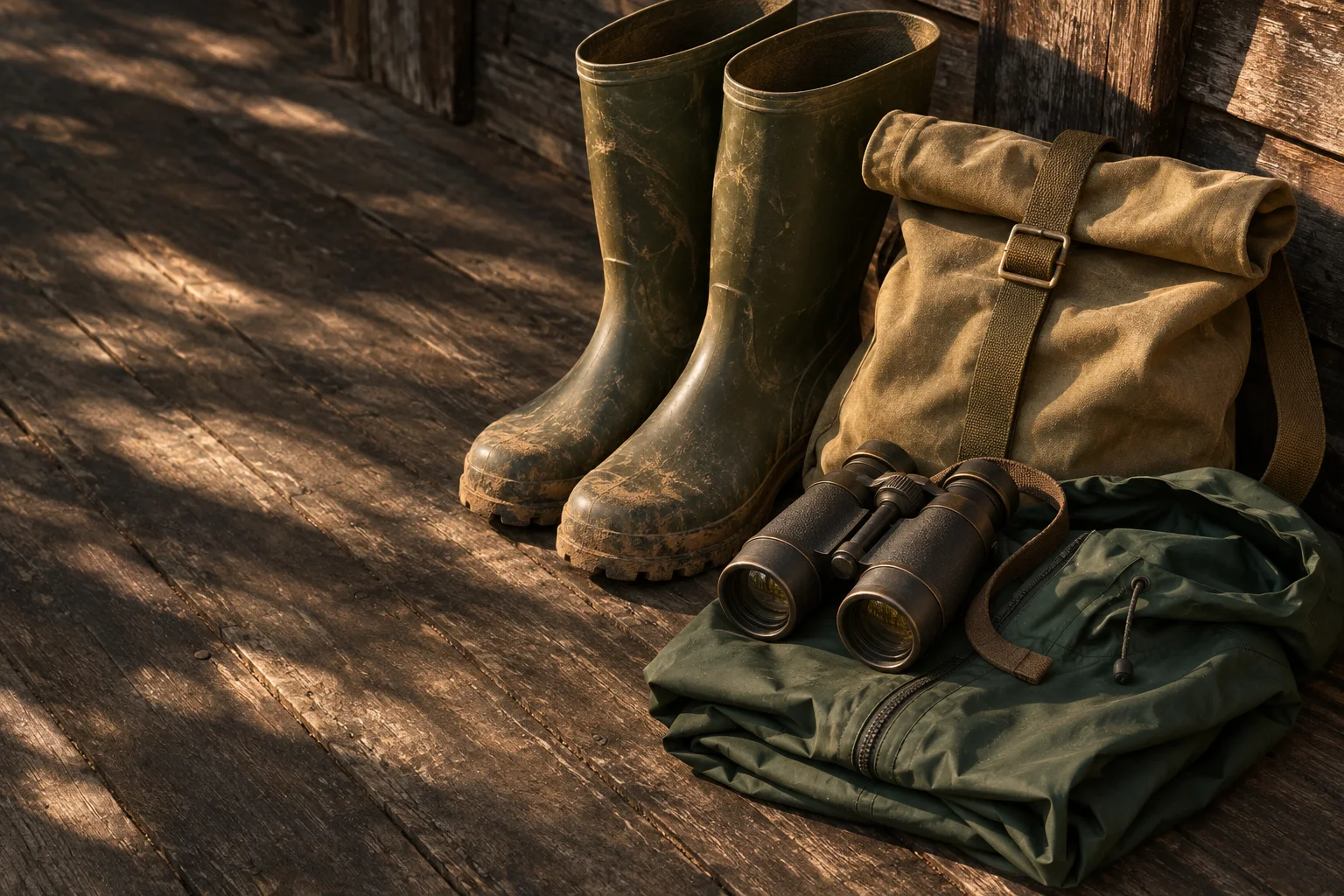
Rubber boots for Mississippi mud
An insulated boot feels different at a creekside picnic table than it does halfway down a muddy levee road. Choose the lining for the hours you actually spend outside.
Measure the sandwich box, the space behind your seat and the walk from the truck. Can counts alone miss all three.
Linked product names open Amazon. As an Amazon Associate I earn from qualifying purchases. Affiliate disclosure.
For a solo morning on the Natchez Trace, lunch might be one rigid food box, a couple of drinks and a frozen bottle. A family picnic needs more food and enough space for everyone to reach it. Lay the load out at home, including the ice packs. Then measure the longest and widest items across their lids. A box can have plenty of capacity and still be too narrow for your favorite lunch container.
Try the 32-ounce wide-mouth Nalgene you actually carry upright under the lid. If you bring hot coffee as well, carry a Stanley Classic insulated bottle outside the cooler so it leaves more room for lunch and ice.
Coleman describes its 16-quart Chiller as holding 11 cans with eight pounds of ice. YETI lists the Roadie 15 at 22 cans with no ice. These numbers describe different loads. Reading them side by side without the ice allowance makes the second cooler look as if it will hold twice as much of the same picnic.
The opening and interior dimensions help more with odd-shaped loads. YETI lists the Roadie 15 interior at 13.6 inches across and 7.5 inches deep. The Tundra 35 is 13.8 inches across and 9.4 inches deep. The bigger model mostly gives you more front-to-back room in this comparison. A platter too long for the Roadie may also be too long for the Tundra.
Use an Igloo MaxCold small ice block when testing how many containers will sit flat. An appliance thermometer placed inside helps you check how cold the cooler stays as the ice melts and the lid is opened.
The Coleman Chiller weighs 3.6 pounds empty. The Roadie 15 weighs 9.6 pounds, and the Tundra 35 weighs 21.4 pounds. Eight pounds of ice brings the three totals to 11.6, 17.6 and 29.4 pounds before lunch or drinks. If you have to carry the cooler several hundred yards and pull open a gate, that starting weight deserves real attention.
For a cooler that stays in the vehicle, measure the lid's swing and the space your fingers need at each handle. A snug cargo-area fit can become inconvenient when a packed cooler has to move every time someone wants a bottle.
Move dry items such as napkins and the visitor map into a Sea to Summit mesh sack rather than using cold space for them. A compact Osprey daypack can take that sack and the water bottles on the walk from the parking lot.
For one or two lunches and a short walk, the Chiller is a practical starting point. The Roadie adds a shoulder strap, tie-down slots and a drain plug for a user who values easier securing and draining. Move to a Tundra-size box when your actual containers require more space or when a crew will share the load. Check the basket against your tallest container before assuming both fit together.
As an Amazon Associate I earn from qualifying purchases. How our links work.
Low empty weight and a simple handle suit lunch for a short day out.
Its published 11-can packing example leaves limited room for a group's meals.
A shoulder strap, drain plug and tie-down slots for frequent vehicle-to-camp use.
Six pounds heavier empty than the Chiller, with a relatively narrow interior.
A wider front-to-back interior and supplied dry-goods basket for a shared lunch stop.
The 21.4-pound empty weight makes long single-person carries less appealing.
An insulated boot feels different at a creekside picnic table than it does halfway down a muddy levee road. Choose the lining for the hours you actually spend outside.

Both magnify a bird eight times. The more interesting differences show up in the width of the view, how the eyecups fit your glasses and what you carry all afternoon.
Two bags can both hold 13 liters and still belong in different parts of the boat. Start with how the bag will travel, then measure what has to fit inside.