
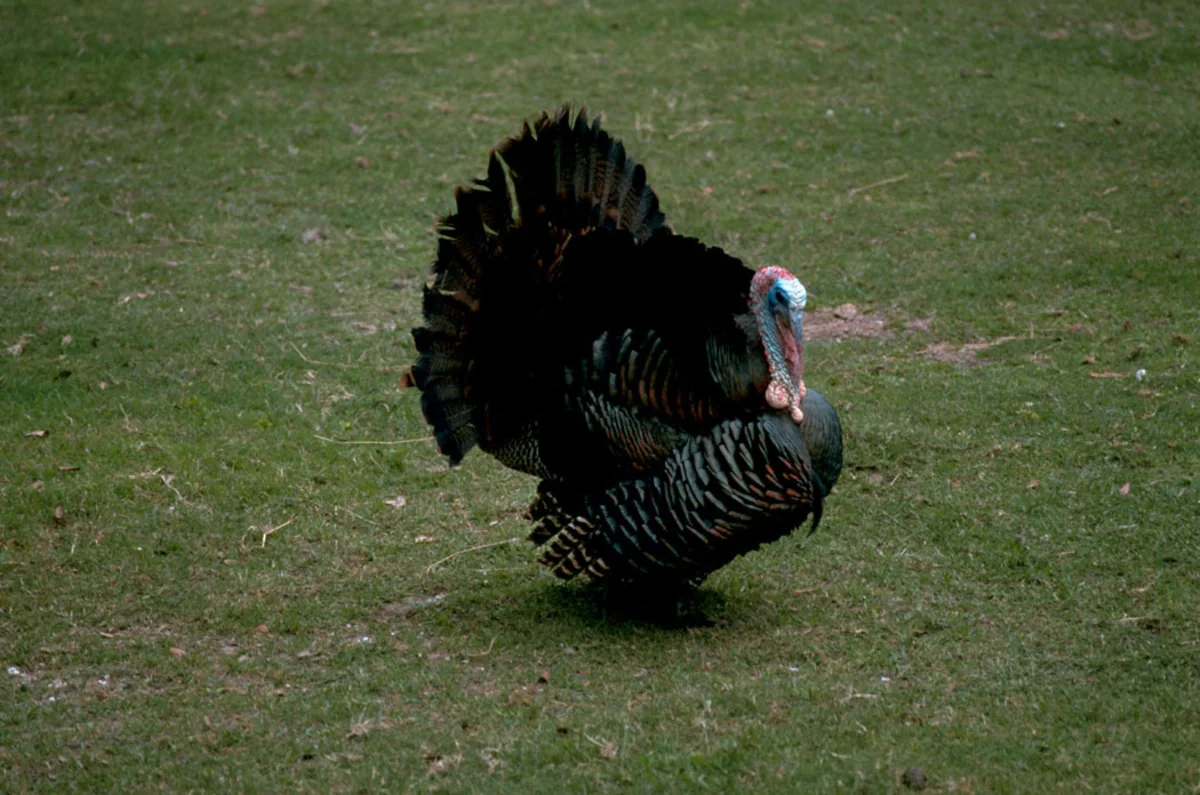
Inside Mississippi’s record spring turkey season
Mississippi hunters reported 17,907 wild turkeys in spring 2026. Behind that record lie three decades of field notes, summer brood counts and a new conservation stamp.
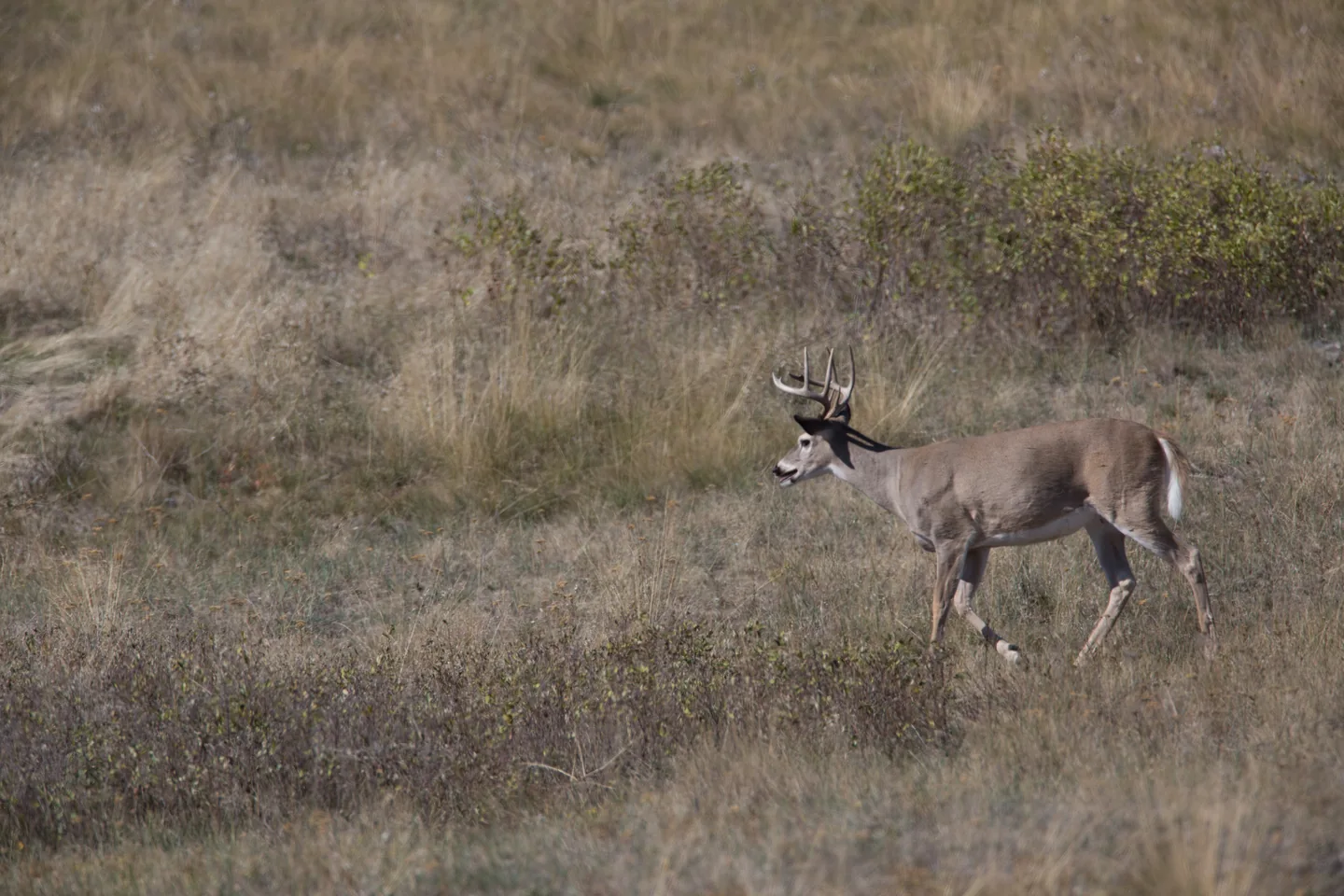
A fence at Leaf River helped rebuild Mississippi’s deer herd. Two generations of deer at Mississippi State later revealed how much the land still shapes each animal.
Linked product names open Amazon. As an Amazon Associate I earn from qualifying purchases. Affiliate disclosure.
In 1939, Mississippi put a fence around 1,300 acres at Leaf River. The idea was to have enough deer inside it that some could eventually leave. When animals from the refuge were taken elsewhere in the state, they went to woods that could support deer but had too few left to sustain a herd. A place set aside to keep deer in became a source of deer for places well beyond its boundary. Mississippi’s account of the early refuges puts that fence at the beginning of the story of its wildlife management areas.
Ten years earlier, the map of Mississippi deer country would have had an astonishing amount of blank space. In 1929 the conservationist Aldo Leopold reported small herds surviving in parts of the Delta and in swamps along the Pearl and Pascagoula rivers. Picture those three places on a state map. The Pearl and Pascagoula drain toward the Gulf. The Delta occupies part of the great alluvial plain in the northwest. Between them, many miles of what a modern hunter would recognize as deer country went unmentioned in that report. The state’s historical account preserves Leopold’s description.
People who can remember the first whitetail they saw on family land and people who have never known that land without deer can both be remembering it accurately. The difference can fit inside two lifetimes. To understand what changed, start with the unusual bargain the state made at Leaf River. A generation hoping for a future deer season first had to give its deer somewhere to live through one.
To put Leaf River in context, unfold the Mississippi Atlas & Gazetteer far enough to see both the Pine Belt and the river swamps Leopold described. A clear map sleeve lets a family carry a marked-up photocopy on the walk and leave the original at home.
The woods themselves had changed. Timber cutting and land clearing removed habitat, while commercial demand gave people a reason to keep taking deer even after the animals grew scarce. A deer could be worth something to a buyer who lived far from the county where it had been killed. A merchant could turn to another source of hides or meat. A family that wanted deer back in its own county had to wait for animals to survive, reproduce and spread. Jerry James Blackard’s history of Southern deer restoration traces both the decline and the changes in land use and public attitudes that helped reverse it.
Mississippi’s Legislature established the Game and Fish Commission in 1932. By 1940 a restoration project was underway with much of its money coming through the federal Pittman–Robertson wildlife restoration program. The emerging refuge system gave that money somewhere to work. Protection bought time for the remaining deer. Better enforcement made the country beyond a refuge more hospitable. Recovering habitat made it possible for animals released there to find food and cover. A stocking record preserves the date deer arrived. The work that allowed them to stay seldom fits in the same entry.
Some of the animals came from other Mississippi refuges, some from as far afield as North Carolina, Texas and Mexico. The scale depends on which map you unfold. Mississippi State puts releases by the state wildlife agency at more than 3,000 deer. Across eleven southeastern states, Blackard documented at least 32,330 between 1890 and 1971. The regional total is easy to misremember as Mississippi’s own. It also explains how many different local histories can sit behind the familiar phrase “they brought the deer back.” Restocking continued in some Mississippi localities through the 1960s, according to Mississippi State University Extension.
Ask where Mississippi’s deer came from and a second question often follows. Does the size of a deer tell you where its ancestors came from? Wisconsin really did supply deer, and bucks from different Mississippi soil regions really do grow to different average sizes. Put those two facts side by side and a story almost writes itself. It also skips the one piece of evidence the story requires. An animal unloaded from a truck must leave descendants before it can explain anything about deer living there generations later.
The Mississippi State Deer Lab’s account of the genetic research gives that question a particularly interesting answer. Some regional genetic patterns are consistent with the old restocking program. The researchers nevertheless report finding no evidence of a Wisconsin contribution to today’s gene pool. A shipping record and a genetic sample can both give a true account of a deer’s journey. One follows an individual to its release. The other looks for what survived all the births, deaths and movement that followed.
There is a second complication. A three-year-old raised on rich Delta ground and a three-year-old raised in the Lower Coastal Plain differ in more than ancestry. The plants available to their mothers differed even before those bucks were born. So might their own food through several growing seasons. The Deer Lab reports that in its regional harvest data, three-year-old Delta bucks averaged 41 pounds heavier than their Lower Coastal Plain counterparts. To learn how much birthplace itself mattered, researchers had to arrange a comparison no pair of neighboring hunting clubs could make.
Eric Michel and his colleagues brought pregnant does and young deer from the Delta, the Thin Loess region and the Lower Coastal Plain to Mississippi State’s deer research facility. They kept the lines of origin distinct and supplied the same high-quality diet. They identified individual young and followed their growth. The scientists could compare deer of similar age, measure an animal more than once and know something a photograph or a set of antlers can never reveal on its own. They knew what the mother had been eating. The researchers published their methods and results.
The second generation made the experiment. A fawn born to a doe brought in from the wild could have good food all its life at the facility and still have spent part of its development dependent on a mother living under quite different conditions. For the next generation, the mother herself could grow up under the shared conditions. That extra wait gave a slow biological process time to show up in the measurements. It is a reason to be cautious about judging any real-world change in habitat after a single growing season.
By the second generation the researchers could no longer distinguish the groups by antler size. Regional differences in body mass had narrowed, although some evidence of a difference remained. The results came from captive animals with reliable access to food. They cannot predict what an individual wild buck in Pike or Bolivar County will weigh. They do explain why the appearance of a wild deer is a poor certificate of ancestry. Even in lines that the researchers deliberately kept separate, changing the conditions under which two generations grew changed what a person could see.
Out on a Mississippi trail, the part of a forest that catches the eye first is often the part a deer cannot reach. A tall hardwood can carry a crop of acorns high overhead. A few yards away the same species might stand above a shaded floor with little green growth at deer height. The acorn crop and the understory supply food on different schedules. Walking through in November gives a good view of one moment in that arrangement. What did this stand offer in July?
The Deer Lab’s forest management work follows the sunlight through the canopy to the vegetation below. As neighboring crowns close together, less light reaches low-growing plants. Where more light reaches the ground, the response depends on what grows there and on the site’s history. From an open trail, Nikon PROSTAFF P7 8×30 binoculars can help connect a distant opening in the crowns to the patch of vegetation beneath it. Then put the binoculars down and look alongside the trail at the height of a deer’s head. The two views describe different parts of the same acre.
Anyone interested in a particular tract can keep a modest record of that difference. Pick a landmark visible from the path, photograph the same frame in leaf and after leaf fall, and put the date and the direction of the view in a Rite in the Rain pocket notebook. Notice which plants persist within reach, which disappear under summer shade and which first appear after a gap opens. A record of one patch will tell you little about the statewide herd. It can tell the next person who walks that trail what the woods looked like before the canopy changed.
For a closer reading of the canopy, pair Petrides’s Eastern Trees with a Carson folding loupe. The guide gets you to the right group of oaks. The lens lets you examine a bud or the underside of a fallen leaf before committing a name to paper.
On a return visit, a Suunto A-10 compass gives the photograph a repeatable direction. Write the bearing beneath the date with a Rite in the Rain field pen. Years later, someone else can stand where you stood and make a fair comparison.
By 1976 the state wildlife agency and Mississippi State had begun a cooperative deer research program. Private land entered the picture in a different way. Under today’s Deer Management Assistance Program, participating landowners and clubs collect biological information and work with agency biologists. An age paired with a weight can be compared with other deer of the same age. Several years of records give a biologist a chance to ask whether an apparent change persists. Each observation acquires value from the others that someone took the trouble to keep.
At Leaf River in 1939, the urgent question was whether Mississippi could protect enough deer to send some elsewhere. A landowner carrying several seasons of records to a biologist can now ask what the deer on one piece of Mississippi ground are telling us about the condition of that ground. Nearly a century separates those questions. The common inheritance is easy to overlook when a whitetail steps into view and everyone stops talking. There was a time when seeing that animal at all would have been the news.
As an Amazon Associate I earn from qualifying purchases. How our links work.
Compact binoculars for comparing a stand’s crown cover with the vegetation growing beneath it from a public trail.
A small weather-resistant log for dating repeat views of forest understory and recording how much ground an observation covered.
Mississippi hunters reported 17,907 wild turkeys in spring 2026. Behind that record lie three decades of field notes, summer brood counts and a new conservation stamp.
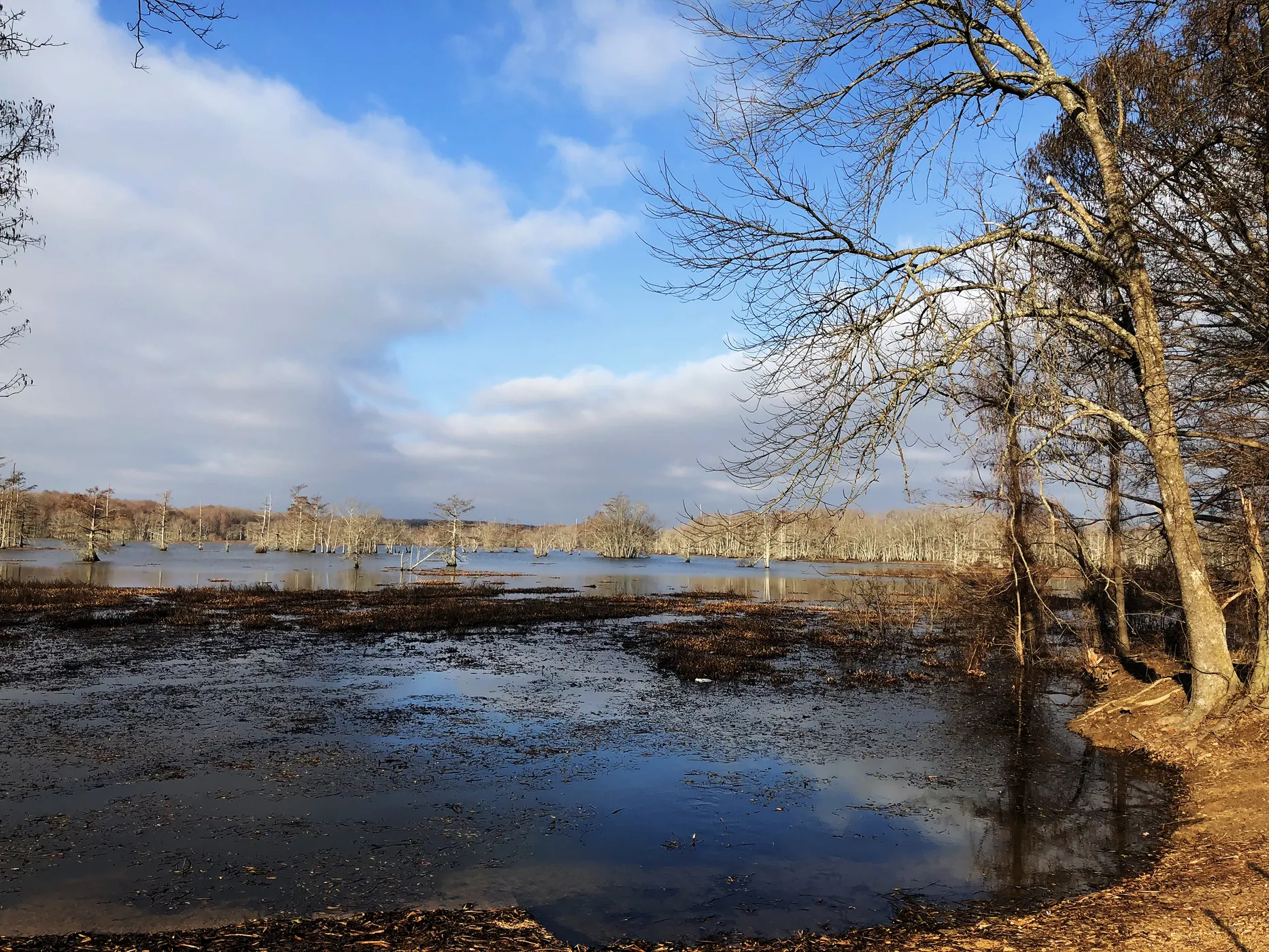
At Panther Swamp, a rise of a foot can change the forest. The trees tell you where the floodwater lingers after the bayous begin to drain.
Learn the difference between browse, forbs and mast, then use those three food groups to read a patch of Mississippi deer habitat.