
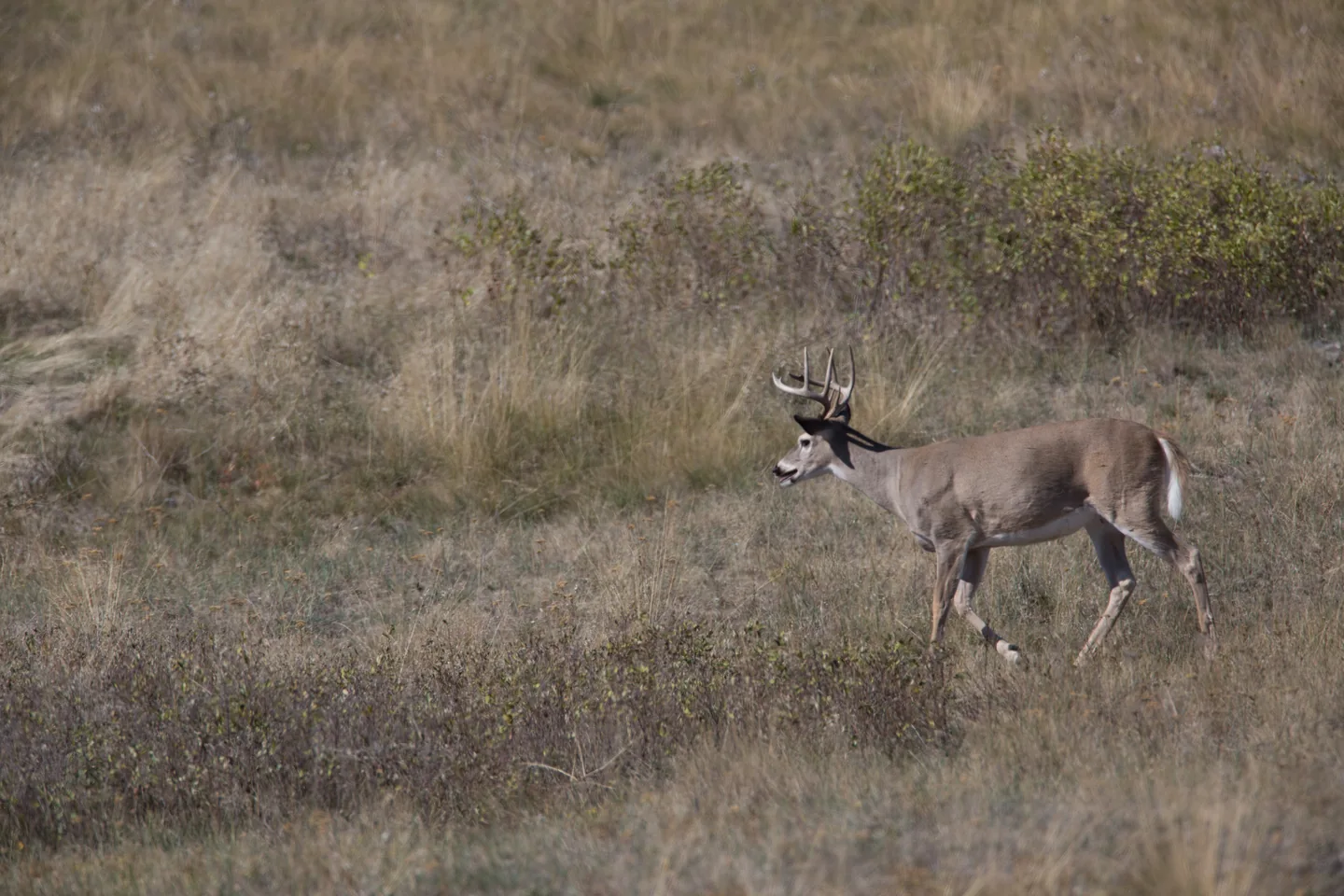
How Mississippi brought back its white-tailed deer
A fence at Leaf River helped rebuild Mississippi’s deer herd. Two generations of deer at Mississippi State later revealed how much the land still shapes each animal.
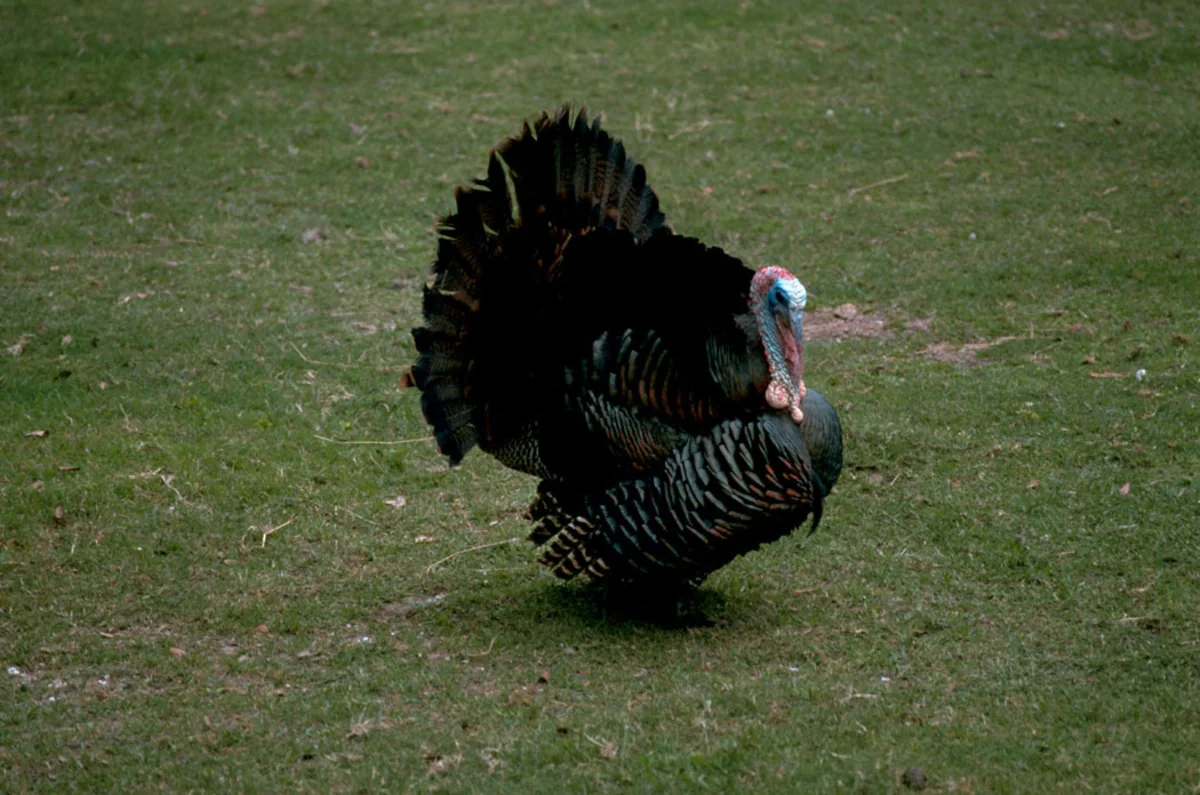
Mississippi hunters reported 17,907 wild turkeys in spring 2026. Behind that record lie three decades of field notes, summer brood counts and a new conservation stamp.
Linked product names open Amazon. As an Amazon Associate I earn from qualifying purchases. Affiliate disclosure.
There are at least two defensible answers to the question of how many wild turkeys Mississippi hunters took in the spring of 2025. The state wildlife department’s annual report gives 11,236 gobblers entered in Game Check. Its forecast for the following spring puts the statewide harvest at more than 32,000. Now add the news from May 2026. The state announced a record of 17,907. How could a record come in so far below the previous spring’s harvest? The answer starts with the person who put each bird on the page. The annual report and the season forecast describe different measures.
Game Check counts birds that people report. Mississippi began requiring those reports in 2019. The previous high in that series was 15,498 in 2024. In 2026, hunters reported another 2,409 beyond the old record, a gain of about 15.5 percent over that earlier high. The arithmetic compares two springs two years apart. It says nothing by itself about how many hens nested successfully between those springs or how many people spent time outside. MDWFP’s May 28 announcement identifies precisely which record fell.
That distinction matters in Mississippi, where the first question people ask about turkey season is often intensely local. Did anyone hear birds in the woods where they grew up? Did hens with young appear along the same stretch of road as last summer? A statewide number and a family’s impression can point in different directions without either being wrong. To understand the spring of 2026, it helps to go back several summers and listen to the people who keep track even when there is very little to report.
The 2025 annual report contains a detail easily lost when the headline total travels. The 11,236 gobblers entered into Game Check were reported by 7,672 individual hunters. That is about 1.46 birds per person who reported at least one. It would be a mistake to call that the average for a Mississippi turkey hunter. A person who spent two weeks outside and came home empty did not submit a harvested bird. That person’s spring disappears entirely if we try to reconstruct everyone’s experience from successful reports.
A statewide harvest estimate addresses a broader question. The state management plan describes a long-running postseason survey that samples license holders and asks about their activity. In a sample survey, a reply from someone who stayed home or saw nothing carries information. So does knowing what population the sample represents and who was left out. The 2026 forecast gives the broader 2025 figure without publishing its calculation or uncertainty on that page. Dividing the Game Check count by that figure would produce a tidy percentage with more precision than these two documents can support.
For someone keeping a clipping for the camp wall, a few words beside the number preserve the achievement. Write “birds reported through Game Check” beneath 17,907, and “series began in 2019.” Leave the place for an all-time census of Mississippi’s wild turkey population blank. That would require evidence about birds that never encountered a person at all, including hens that spent much of the spring out of view.
Summer supplies a more revealing number for the next generation of turkeys. In 1994 the state began organizing field observations of reproduction. Agency staff and cooperating observers logged the turkeys they encountered during their regular duties in June, July and August. A forester could contribute to the same survey as a wildlife biologist. Hens with young are memorable. The harder habit to acquire is writing down a hen that crosses alone. Much of what the state can learn depends on that unremarkable sighting. The management plan describes the summer survey.
Consider four hypothetical hens, each seen separately and clearly enough to count. One is accompanied by five poults, one by three, and two by none. Among the two groups with young, the average is four poults. Across every hen seen, the average is two. Both answers are true. The second includes something the first loses, the number of hens observed without young. If only the two family groups make it into a diary, a reader could come away impressed by the size of the groups and miss half the summer’s story.
Even careful observers cannot see every chick hidden by grass. A hen seen alone on Tuesday need not have spent the whole summer without young. The survey combines the experiences of many observers to follow an index over time. It cannot reconstruct every nest. From a public path, compact Nikon 8×30 binoculars give a watcher the option to stay where they are while a group passes through an opening. A note that says “at least three young visible” preserves an uncertainty that a confident-looking numeral would erase.
There is a striking example in the state’s older brood figures. Its management plan gives almost the same average size for single-hen broods observed in 1995 and 2016, roughly five and a half poults. Across the broader period, the share of hens seen with young declined. A reader following only the size of the family groups would have missed that concern. A good hatch in a later forecast therefore deserves the follow-up question a biologist might ask. Did observers see larger broods, more hens with young, or both?
On a humid brood-count walk a mesh head net keeps insects off the observer’s face while both hands are busy with glass and pencil. When you get home, check the features you saw against Sibley’s eastern bird guide before recording an uncertain identification.
Since 1995 volunteers have kept another set of records for the Spring Gobbler Hunter Survey. These volunteers record their experience afield, giving the state a way to follow changes in activity and effort. A silent morning has value because it supplies hours of observation. Three people hearing a turkey during one outing and one person hearing it on three successive mornings represent quite different evidence from three individually identified birds. A volunteer’s record can preserve those distinctions better than a season-end conversation built around the most memorable sound.
The people doing the listening have histories of their own. In a Mississippi State analysis of four spring seasons, 618 participants accounted for more than 20,000 outings during 2015–18. The average participant was nearly 49 and had about 25 years of experience. The researchers found an association between the hunter’s age and the chance of recording at least one successful harvest. The data came from people willing to maintain a survey. They invite a question about who is observing the woods whenever a change in their reports is attributed entirely to the birds.
Suppose ten volunteers keep records for several years and the two with the most free time stop participating. Even if the turkey population around those homes holds steady, total hours in the volunteer records may fall. Measuring observations per hour helps with some differences in effort. It cannot give a new participant the missing observers’ hearing, familiarity with a place or choice of days. A Rite in the Rain pocket notebook can keep a simple personal record honest in much the same way. Date the entry, include the hours outside and write down a zero while the morning is still fresh.
A folding foam seat on a public viewing bench makes it easier to keep a consistent observation period on damp mornings. An all-weather field pen keeps an entry legible when the page gets speckled with rain. Include the quiet portion of the visit in the time you record.
Matthew Palumbo and colleagues put the surveys alongside one another across five Mississippi turkey regions. Using observations from 1995 through 2008, they compared summer counts of poults per hen, sightings of young males called jakes in the following spring, and gobblers heard a spring later. The team found associations between these measures, including an association between the summer poult index and gobblers heard two years later. The published study offers a rare chance to follow the outline of a generation without putting a band on each individual bird.
If your family keeps several years of observations, use a Mississippi road atlas to sort them by county. A clear map sleeve can hold a working copy of just that county with dated notes. Keep the original sheets so a later change in boundaries or categories is easy to spot.
Consider what it took for that relationship to emerge. An observer in summer had to notice a small bird moving beside a hen. Another person had to identify a young male the following year. Other volunteers logged what they heard when that cohort had reached a second spring. Nobody needed to claim the birds in the three notebooks were the same individuals. Patterns emerged when thousands of such encounters were organized by region and year. That is a stronger reason to keep the notebooks than the prospect of predicting exactly what will happen on opening day at a single property.
The 2026 forecast itself shows why geography matters. State biologists described a strong 2024 hatch in northern Mississippi. In the Delta, some properties behind the Mississippi River levee reported strong hatches even as the wider region recorded lower hatch figures in 2024 and 2025. You can recognize a strong statewide season, pay close attention to a weaker regional signal and believe someone whose home ground had an exceptional spring. The regional forecast leaves room for all three observations.
The spring of 2026 also produced 31,177 purchases of Mississippi’s new wild turkey stamp. The state cited that figure alongside the record harvest. It is tempting to divide reported birds by stamp buyers and call the answer a success rate. One is a count of birds, which allows multiple reports from one person. The other is a count of purchases, and the law includes exemptions. Even a pair of perfectly accurate totals cannot answer a question about the fraction of individual participants who succeeded. The signed legislation and the state’s stamp guide explain what was actually created.
The stamp gives Mississippi a dedicated source of money for habitat, monitoring and research. Its effect will take longer to read than a season’s harvest report. A habitat project funded by one spring’s purchases can influence cover available to a hen in a later summer. Any young she raises may enter successive surveys years apart. That is what gives the record spring a life beyond the number on the camp wall. The next chapter might start with a field worker who has no turkey story to tell at supper, just a date, a county, a solitary hen and the good sense to write her down.
As an Amazon Associate I earn from qualifying purchases. How our links work.
For watching a brood from an established path while giving the hen and young room to move.
A field log for the time spent outside and the details behind a sighting, including days with zero observations.
A fence at Leaf River helped rebuild Mississippi’s deer herd. Two generations of deer at Mississippi State later revealed how much the land still shapes each animal.
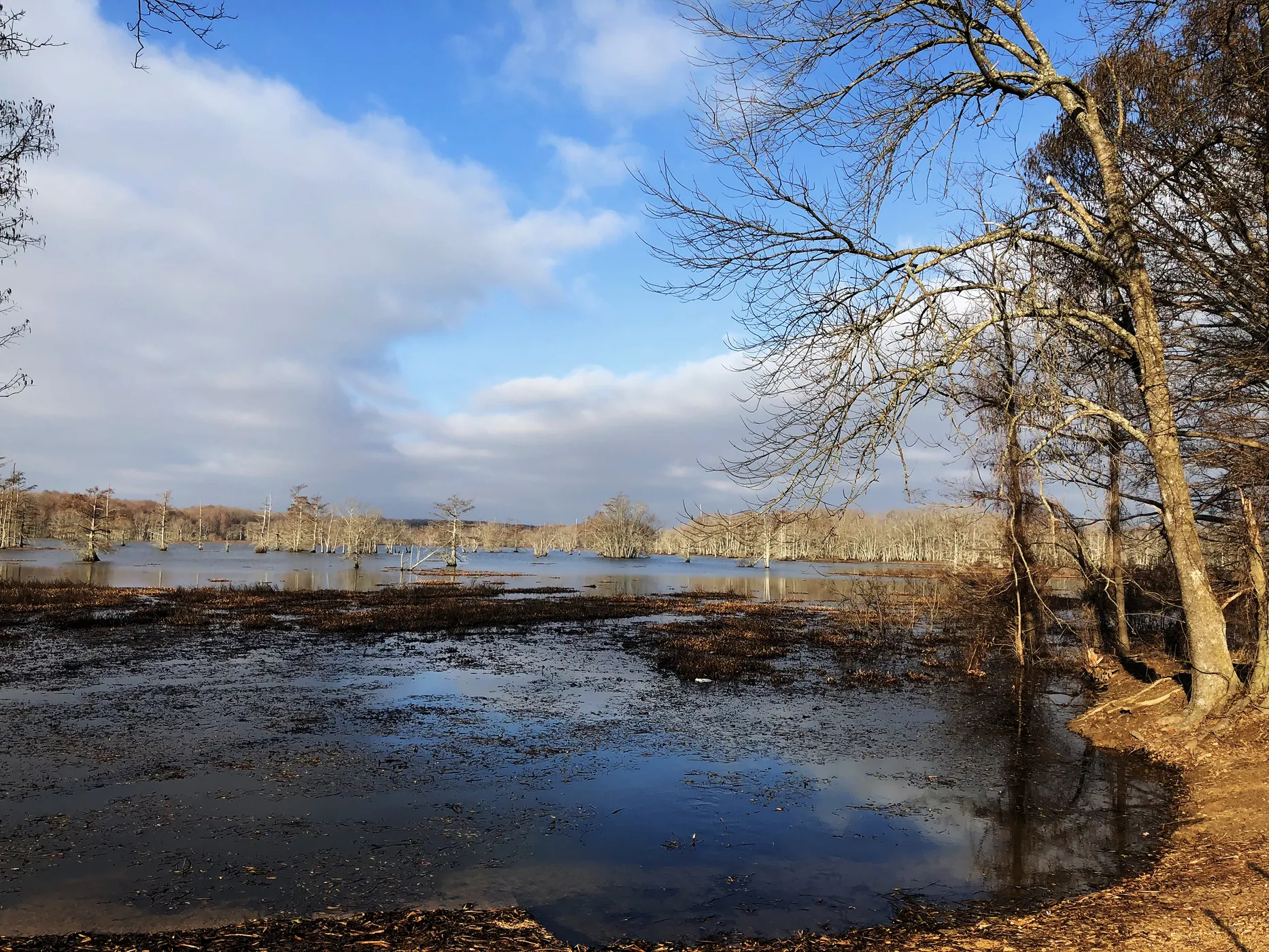
At Panther Swamp, a rise of a foot can change the forest. The trees tell you where the floodwater lingers after the bayous begin to drain.
Learn the difference between browse, forbs and mast, then use those three food groups to read a patch of Mississippi deer habitat.